

Ireland is famous for its rich history and warm hospitality, but some of its deep-rooted traditions can leave visitors feeling completely baffled.
When you visit the Emerald Isle, you might see a crowd of locals diving into a freezing Irish Sea on Christmas morning or witness a group of adults crowning a mountain goat as their king. Ireland has unique customs, and to the uninitiated, they might seem bizarre and confusing.
Irish people don’t just practice these traditions with dedication, they honour them with a sense of loyalty. Here are the seven Irish traditions that make no sense to foreigners.
7. Christmas Day swims – a freezing dip that doesn’t make sense
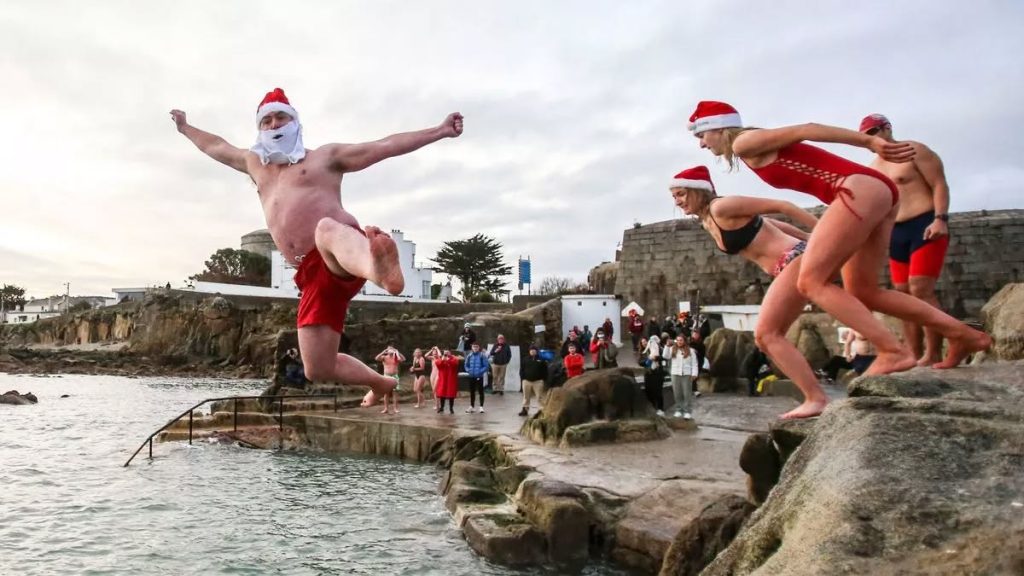
While the rest of the world is tucked up by a warm fire on Christmas morning, thousands of Irish people brave the chilly sea waters for a swim, often to support local charities.
This age-old tradition involves taking an early morning dip in a swimsuit while wearing a Santa hat. Some popular spots for this annual ritual include the Forty Foot in Sandycove, Dublin, or Salthill in Galway.
Every Christmas morning, you’ll find a huge crowd of festive swimmers lined up to dive off the rocks into the cold seawater below. The Christmas Day swim tradition symbolises generosity, resilience, and community spirit, but to the visitors, it’s a total mystery.
6. The Leaving Cert weather – a meteorological miracle

In Ireland, the “Leaving Cert Weather” is a popular phenomenon that occurs every June, when teenage students sit for their final exams in the Irish secondary school system.
During this period, the country miraculously experiences a few days of fine sunny weather while the learners are confined to examination halls.
However, despite the pleasant sunshine, the cultural belief is that the weather turns erratic shortly afterward. People often joke that during this time, the weather is too good to be locked up in an exam room. To a foreigner, this meteorological miracle makes no sense.
5. St. Stephen’s Day Wren Boys – a straw suit spectacle
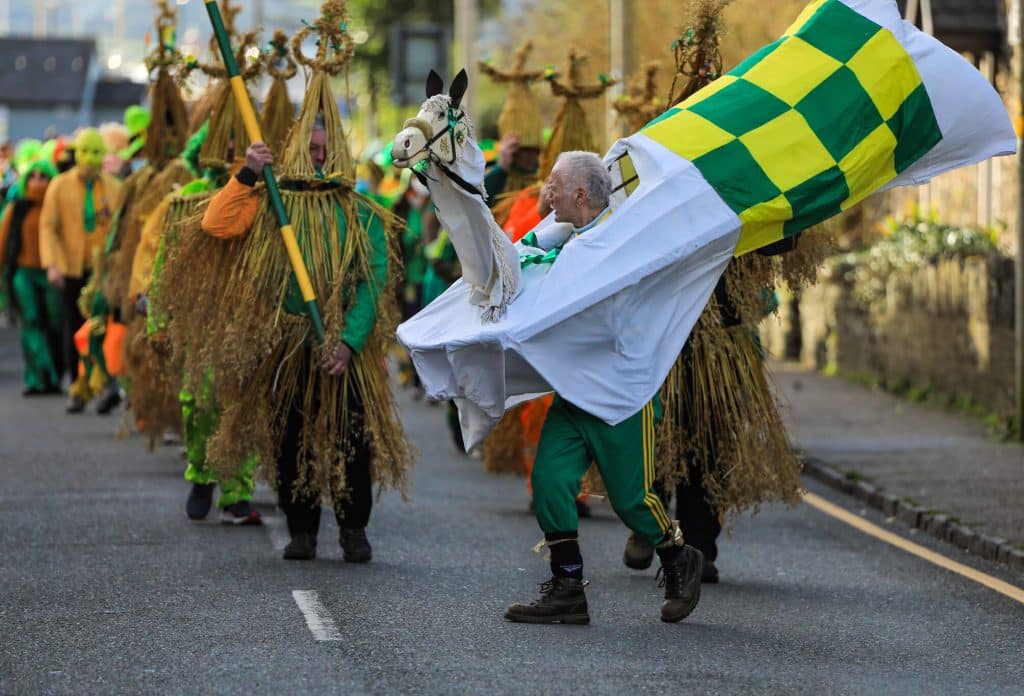
If you visit Ireland around 26th December, you might see men dressed in colourful straw suits from head to toe, dancing through the streets and playing fiddles.
Historically, young men known as Wren Boys would kill a small bird (wren) and parade it from house to house, singing songs and playing music.
The group would then demand money to bury the bird, and if a household refused, they could bury it at their doorstep to signify a curse of bad luck.
Today, the tradition has transformed into a lively festival where people use a fake bird instead of a real one, with all money raised going to local charities.

4. Lighting a candle in the window – a tradition of welcome and hope
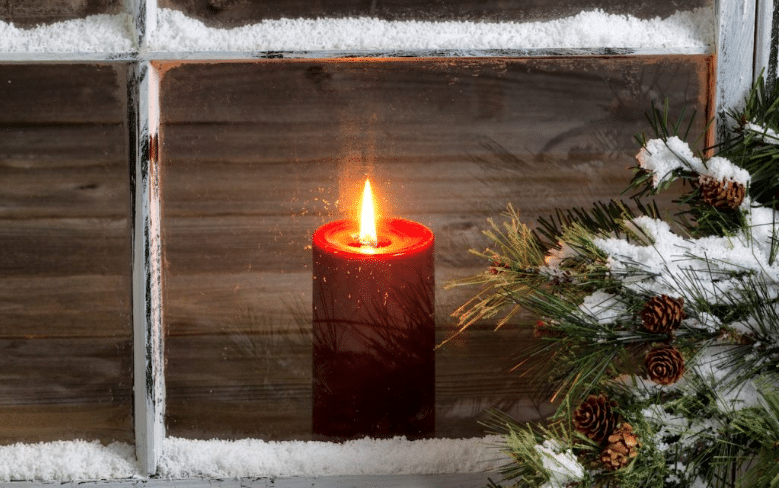
If you walk through an Irish town at Christmas, you’ll notice a single candle burning in the front window of almost every house. It’s not just a simple decoration, but it signifies many years of faith, history, and hospitality.
To a visitor, this might look like a bizarre Christmas ritual. However, it’s a symbolic gesture meant to show the true Irish spirit of Christmas; that everyone, sacred or stranger, is welcome in the home.
3. The Puck Fair – crowning a wild goat as King

Every August, in the town of Killorglin, Co. Kerry, a wild mountain goat is crowned King. It’s actually one of Ireland’s oldest festivals, involving music and round-the-clock partying where a carefully selected mountain goat is paraded through the town before being crowned King Puck.
The Puck Fair is one of the Irish traditional rituals that is still practised today, but to a visitor, it’s a strange event that leaves them baffled.
2. Burying the Child of Prague – a desperate plea for sunshine
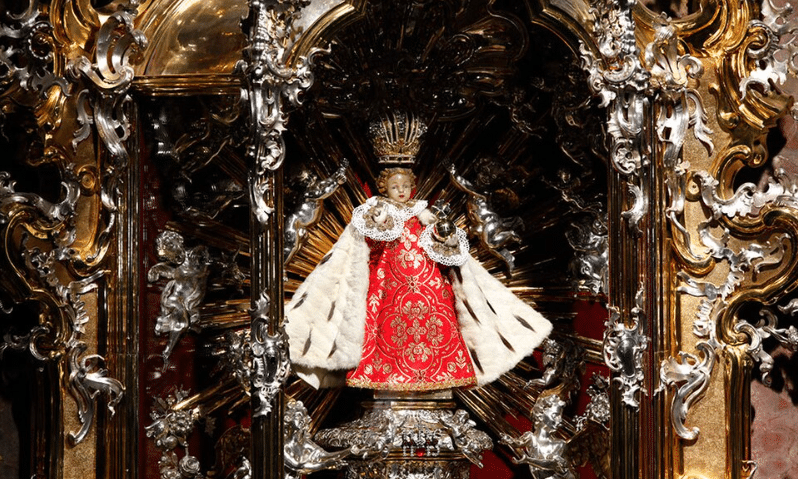
In Irish folk tradition, if the weather forecast looks grim for a wedding ceremony, someone has to bury a small statue of the Child of Prague (Infant Jesus of Prague) somewhere in the garden the night before the ceremony.
This weird Irish superstition dictates that to guarantee a sunny wedding day, one must place the statue under a hedge or bury it in the garden.
This form of weather insurance is common in Ireland, a country known for unpredictable weather patterns. However, foreigners find this practise strange because the statue seems at odds with its religious significance.
1. The Death Notice obsession – a national mourning ritual
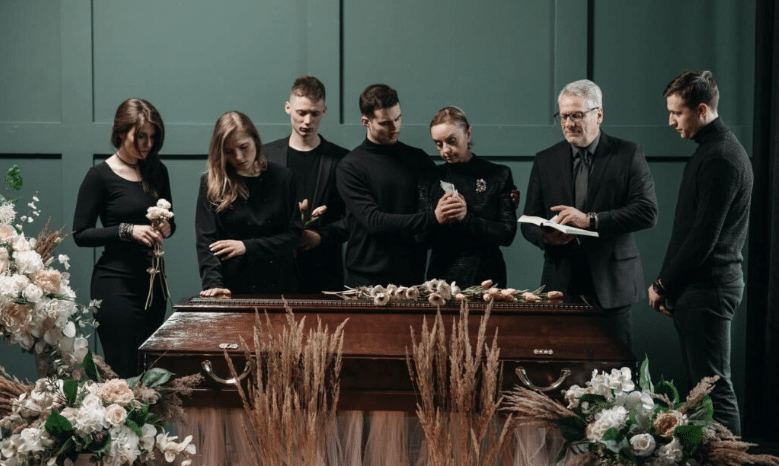
In many countries, death is a private affair, and you only check the obituaries if you’ve lost someone, but in Ireland, checking RIP.ie or listening to the local radio for the death notices is a daily ritual. It’s regarded as an important part of mourning, just like checking the weather report.
It ensures no one misses a funeral or the chance to pay their last respects to a friend or loved one. While death is a taboo topic in most cultures, in Ireland, it’s treated as a daily social activity.
