
If you’ve not already been in this situation, you’re almost guaranteed to experience it once you’ve spent any real time in Ireland.
You finish a day of sightseeing, errand runs, and coffee catchups, the kind of day where your step count is impressive, and your energy isn’t. Then the text comes in. “Quick drink?”
It sounds perfect – a pint, a chat, home by ten and fresh for the morning. You’re not planning a session. You’re just winding down.
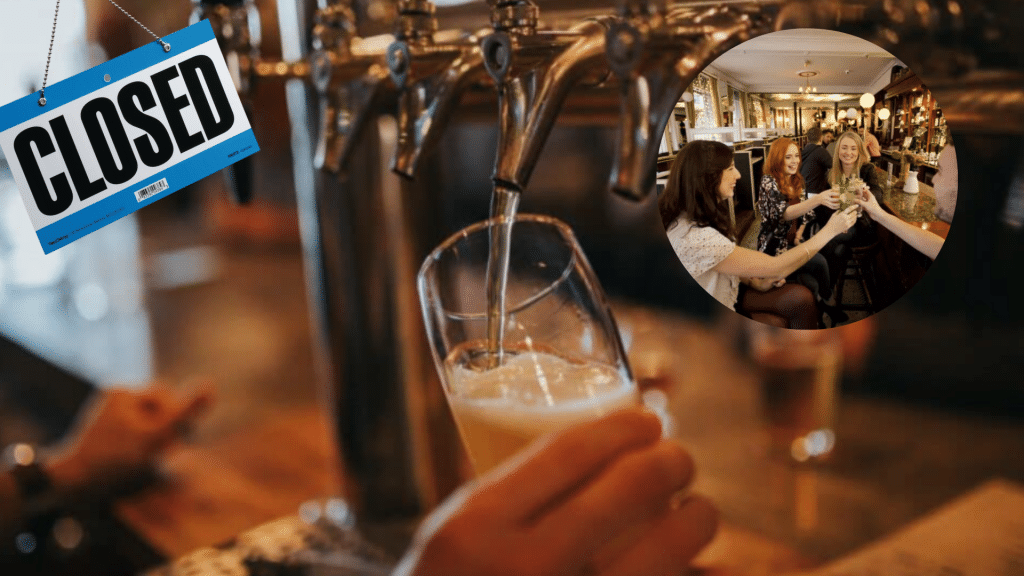
You step into the bar, and the fire is lit, there’s a trad band setting up in the corner, and it’s warmer and drier than it is outside, which in Ireland is often reason enough to stay.
You take off your coat, order your drink, and quietly reassure yourself that you’ll only have the one. That’s usually the exact moment the plan begins to slip.
The lie we tell ourselves – “I’ll just have one”

There’s a very specific optimism that exists at half seven in an Irish pub. You genuinely believe you have full control of the evening. You’ll have a drink, maybe two at most, and you’ll leave exactly when you said you would.
The first pint goes down easily. The conversation flows without effort. Someone you vaguely know joins the table, and someone else pulls up a chair without asking because that’s just how it works.
The music starts properly, and the room fills out, not in a chaotic way but in a comforting one.
The Irish pub is the life and soul of Irish social life. It’s not just somewhere to drink, it’s somewhere to land. Stories are told, retold and improved upon.
Debates spark up about GAA, politics or who makes the best toastie. Strangers are no longer strangers by the end of the second round.
This is one of the things that always happens on an Irish night out. You glance at your phone expecting it to be half nine, but somehow it’s nearly eleven.
When the music takes over – there’s no going home now

At some point, the music shifts from background noise to the centre of attention. A fiddle kicks things off properly, the bodhrán joins in, and the low hum of conversation softens just enough for everyone to lean in.
Someone who insisted they wouldn’t sing is suddenly halfway through a ballad that silences the room, and for a few minutes, nobody is checking their phone or thinking about tomorrow.
For visitors, this is often the moment Ireland feels less like a postcard and more like something real. It’s not the cliffs or the castles, it’s a crowded room, wooden tables, condensation on glasses and a group of people completely present with one another.

For Irish people, it’s a normal enough night out. The Clancy Brothers once said Irish music isn’t performed, it’s shared, and that’s exactly what it feels like.
You’re not watching it unfold; you’re part of it, whether that means clapping along confidently or singing a chorus you only half know. Another round arrives, and no one seems entirely sure who ordered it, but no one questions it either.
The slow slide to 4 am – when the trap finally lets go

There’s no dramatic turning point where the night suddenly becomes a big one. It builds gradually, almost politely.
You say you’ll head after this drink, and you probably mean it at the time. Last orders are called, and the entire pub reacts as though this is mildly offensive. A classic Irish response to being told the bar is closing.
Coats are collected slowly, conversations continue in the doorway, and someone suggests food as if that hasn’t been inevitable for the past hour.
Before you know it, you’re outside, laughing on a street that feels quieter than it did earlier. There’s wind, there may be rain, and there is a discussion about where’s still open.
The night has shifted from cosy pub corner to late-night wandering. You finally check the time, and it’s closer to four than midnight.
Why we keep falling for it – over and over again

The funny thing is, nobody truly regrets it. Tourists will go home and talk about that night more than the museum they visited earlier that day.
They’ll remember the music, the warmth, and the way someone they’d never met insisted on buying them a drink just because they were visiting.
Irish readers know this rhythm well. The casual invite, the easy “ah sure,” the way an ordinary Tuesday quietly becomes something you reference for months.
It isn’t really about the drink at all. It’s about time stretching in a way it rarely does anymore. It’s about conversation without an agenda and laughter that doesn’t feel rushed.
So, if you’re visiting Ireland and someone suggests a quick pint, say yes, just don’t be too attached to your early start the next morning, and have the hangover cures at the ready. If you’re Irish and reading this, you already know how this ends. It was never just one.
