
Learning the local lingo is the fastest way to turn your trip to the Emerald Isle into an unforgettable experience.
While Ireland is an English-speaking country, locals have a distinct way of speaking that differs significantly from standard English.
Most tourists often walk into pubs armed with a few phrases they’ve seen in movies, only to realise that the word “grand” has about fifty different meanings.
If you want to blend in like a local and avoid looking like a clueless newcomer, you’ll need to understand these words and phrases. Here are the ten Irish slang words tourists always get wrong.
10. Suckin’ diesel – finally making some real progress
This descriptive Irish expression means that things are progressing smoothly or going your way, with high momentum.
It implies that a situation has moved from a slow start to running at full power. Irish people often use this phrase to describe when a business venture begins to do well or when a difficult task is nearing completion.
If your day is going well, you can also say you’re suckin’ diesel. It’s an expression of how a powerful engine is finally getting the fuel it needs to roar to life. Whenever you hear this slang phrase, it means the hard work is finally paying off, and success is forthcoming.
9. Minerals – carbonated drinks for the thirsty

When you visit Ireland, don’t expect healthy supplements or a glass of vitamins when you order minerals. It refers to carbonated fizzy soft drinks like lemonade, Coke, or Club Orange.
If you’re planning a night out and you’re the designated driver, your Irish friends might ask if you’re “on the minerals.”
To outsiders, the phrase might sound slightly old-fashioned, but it’s a standard slang term that culchies use, although it’s also popular in urban centres. This phrase is common among the older generation, so expect some “minerals” when you visit your Irish grandparents.
8. Your man/ Your wan – the local way of identifying you

Irish locals use the term “Your man” as a way of referring to any male whose name they don’t know, while “Your wan” (derived from ‘one’) refers to a female.
When an Irish person points to “your man” or “your wan” over there, they could be talking about a total stranger across the street.
It keeps the conversation flowing without requiring specific names. It’s like saying “that guy” or “that girl” in an informal way. If someone calls you “your man,” don’t feel offended; it’s just the local way of identifying you.
7. Deadly – the highest form of praise
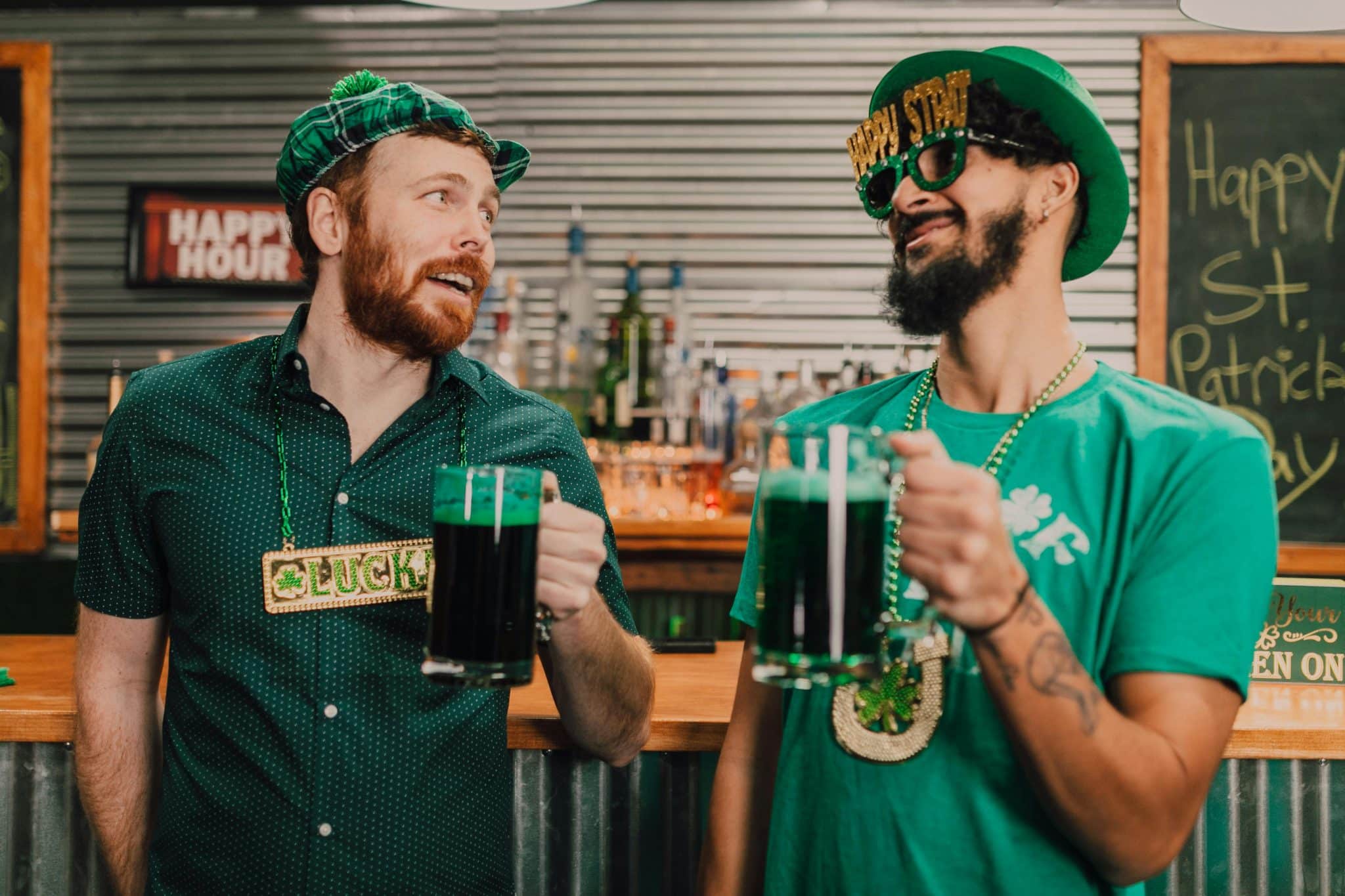
This slang term is popular in most urban areas, particularly in Dublin, and is a positive compliment rather than a negative word. When an Irishman refers to something as “deadly,” they don’t mean it’s a safety hazard; they’re implying that it’s fantastic.
If you hear a local describe a pub or restaurant as deadly, it’s a glowing recommendation that means the place is fantastic. It’s one of the many examples where the Irish locals turn a negative English word into a positive one.
6. Banjaxed – beyond the point of repair

When an Irish person describes someone or something as banjaxed, it often implies that the person or object is broken or exhausted.

If a vehicle, phone, or household appliance is completely ruined or broken, the slang word to use is banjaxed. It can also apply to a person who is drunk, injured, or feeling absolutely tired after a long flight or hike.
Your car might be banjaxed after hitting a deep pothole on a country road. Using this phrase carries more weight than just saying something is broken beyond repair.
5. Shifting – a romantic encounter, not moving furniture

When visiting Ireland, be very careful with this word at the nightclub, as it refers to passionate kissing or making out rather than relocating furniture. It’s commonly used by younger people at social events or parties to describe their romantic experiences.
When someone says, “They were shifting at the party last night”, it means they were kissing. This word is a staple of Irish slang that every visitor should know to avoid awkward misunderstandings.
4. Giving out – a verbal scolding rather than a donation

Giving out is an Irish phrase that has nothing to do with charitable donations. It refers to complaining, criticising, or scolding someone. It may also refer to telling someone off, like a boss giving out to someone for being late.
It describes a lecture or a stern talking-to from a parent or an authority figure. For example, if you forget to close the back door, your mother might “give out” to you for hours. It’s one of those Irish slang words that sounds perfectly normal to a local but can leave tourists confused.
3. Acting the maggot — stop being a nuisance

If someone tells you that “you’re acting the maggot,” they are not comparing you to an insect. They are telling you to stop misbehaving or fooling around.
It’s a casual way of telling someone that their behaviour is annoying or childish. While it’s common to hear parents saying it to their children, people also use it in social places like pubs.
Acting the maggot implies someone has reached the level of foolishness that is starting to test everyone’s patience. If you become a nuisance or mischievous, expect to be told to stop acting the maggot.
2. Grand – the absolute opposite of magnificent

While the rest of the world uses grand to mean “magnificent,” the word means “fine,” “okay,” or “don’t worry about it” in Irish slang. If you ask how someone is and they say they’re “grand,” it means they are doing just fine, nothing more and nothing less.
Sometimes people use it to end an argument or settle a deal, acting as a verbal full stop. If a situation is actually spectacular, an Irishman will rarely use the word grand to describe it.
1. The craic – more than just a good time

Most tourists think that craic means “fun,” but it actually refers to the entire atmosphere, news, and everything good in Ireland.
It’s one of the most iconic Irish phrases that can mean so many things depending on the context. When someone asks you, “What’s the craic?” they’re simply asking how you are or if there is any gossip.
It can also imply that someone is good company and fun to be with, while a party can be “Great craic” if you had a lot of fun. Just remember that despite how it sounds, it’s spelled “craic,” not “crack.”
